Trades
Find a builder you can trust
From a second storey to a full knock-down rebuild, a good builder turns your plans into something solid that lasts. We match you with one vetted local builder, not a list to chase.
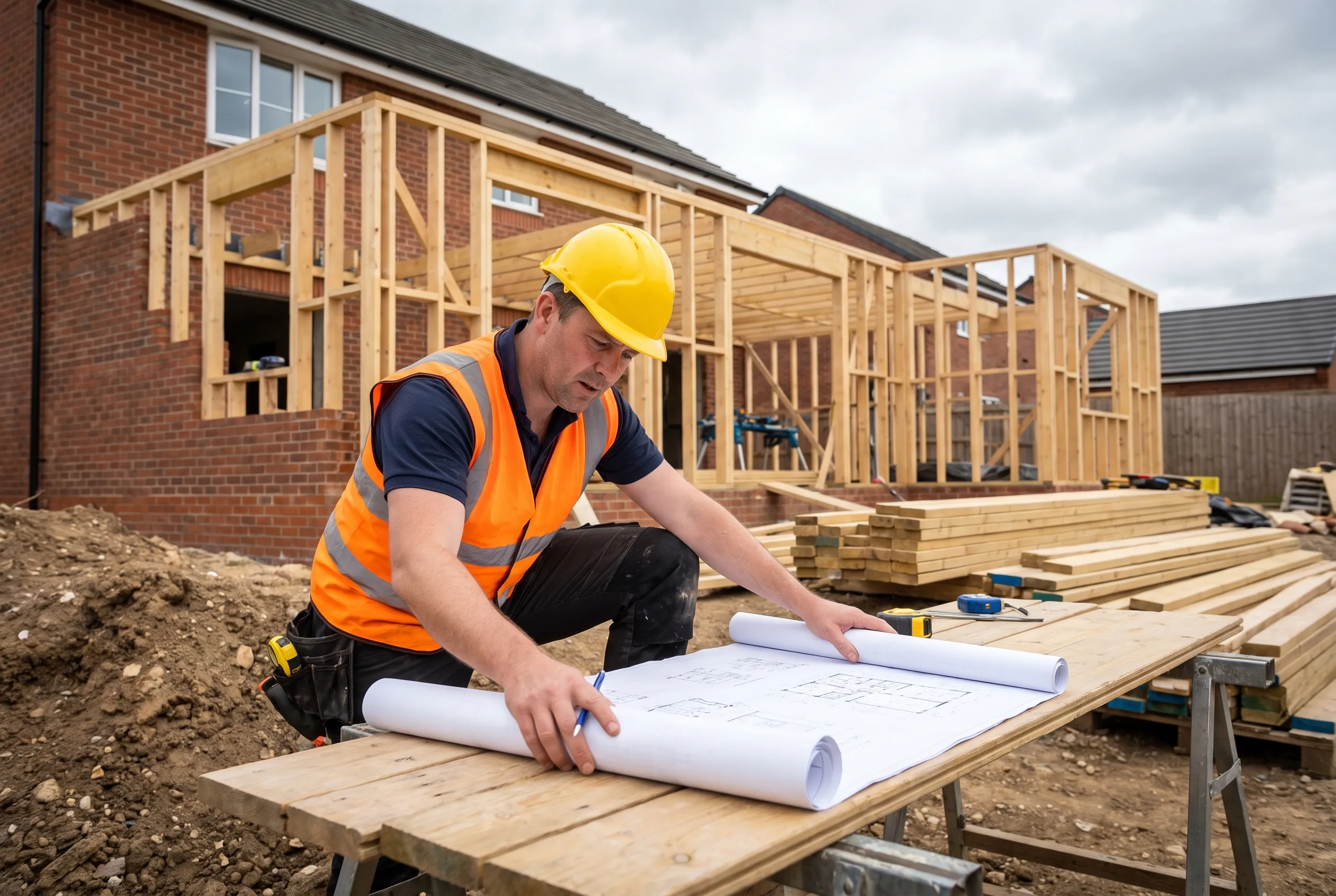
What a builder can do
- Home extensions and second-storey additions
- Whole-home and kitchen or bathroom renovations
- New builds and custom homes
- Structural changes, removing walls and underpinning
- Knock-down rebuilds
- Granny flats and secondary dwellings
- Structural decks, pergolas and outdoor living
When to call a builder
If your project touches the structure of your home, you want a builder. That covers the big stuff like extensions, second storeys, knock-down rebuilds and new homes, but also jobs people underestimate: removing a load-bearing wall to open up a kitchen, underpinning a shifting foundation, or building a structural deck off the back of the house.
A handyman or a single trade is fine for small, contained work. The moment a job involves footings, framing, multiple trades or council approval, a licensed builder is the person who pulls it all together and stays accountable for the result. They coordinate the chippies, sparkies and plumbers, manage inspections, and make sure the finished job actually meets the building code.
What to check before you hire
Building is one of the trades where doing your homework really matters, because the jobs are big and the cost of getting it wrong is high. Before you sign anything, check:
- The builder holds a current licence for the type and value of work. Each state runs its own scheme (for example Building Commission NSW, the QBCC in Queensland, the Building and Plumbing Commission in Victoria, or the relevant body in your state), and the value at which a licence becomes compulsory varies. Our licence checks page has the lookup for every state.
- There is a written contract for anything sizeable, covering scope, price, timeline and variations.
- They carry the right insurance. Public liability is a must, and for larger residential work most states require home warranty or builders indemnity insurance, which protects you if the builder can’t finish or fix defective work.
- You can see real references and a couple of completed projects.
It is worth reading up on deposits, contracts and your rights before you commit, so nothing in the paperwork catches you out later. Our broader tradie licences guide explains how licensing works across the trades too.
What it costs
Builder pricing has a huge range, because “a build” can mean a small deck or a brand new four-bedroom home. Most builders price by the project under a written contract rather than by the hour. As a rough guide:
- New home build: around $1,800–$4,000 per m², build cost only
- Single-storey extension: around $2,500–$4,500 per m²
- Second-storey addition: around $3,500–$6,000 per m²
- Bathroom renovation, mid-range: around $15,000–$35,000
- Kitchen renovation, mid-range: around $20,000–$45,000
- Small jobs and variations: around $85–$150 an hour
The things that move the number most are the size and complexity of the job, the level of finish, how tricky the site is (slopes, reactive clay and tight access all add cost) and how much structural work sits behind the pretty bits. These are a guide, not a quote. Our builder cost guide goes into more jobs and how each city compares. Be cautious of a number that looks too good to be true, and never hand over a big deposit before work begins.
How needatradie matches you
Here’s the bit we think makes life easier. Instead of posting your job and fielding a week of sales calls, you tell us what you’re planning and we match you with one vetted local builder. We’ve already checked their licence, insurance, ABN and reviews, so you’re talking to someone who’s the real deal.
One good tradie, not five quotes to wade through. We don’t sell your details around, and it’s free for homeowners. When you’re ready, get a free quote and we’ll line you up with a builder who can actually do the job.
Builders: common questions
Do I always need a licensed builder?
How much does a builder cost?
Is $400,000 enough to build a house?
Do I need a written contract?
How much deposit should I pay?
How long does a build take?
Ready when you are
Need a builder? Tell us about the job.
Free, no obligation, no spam, and no calls until you say so.